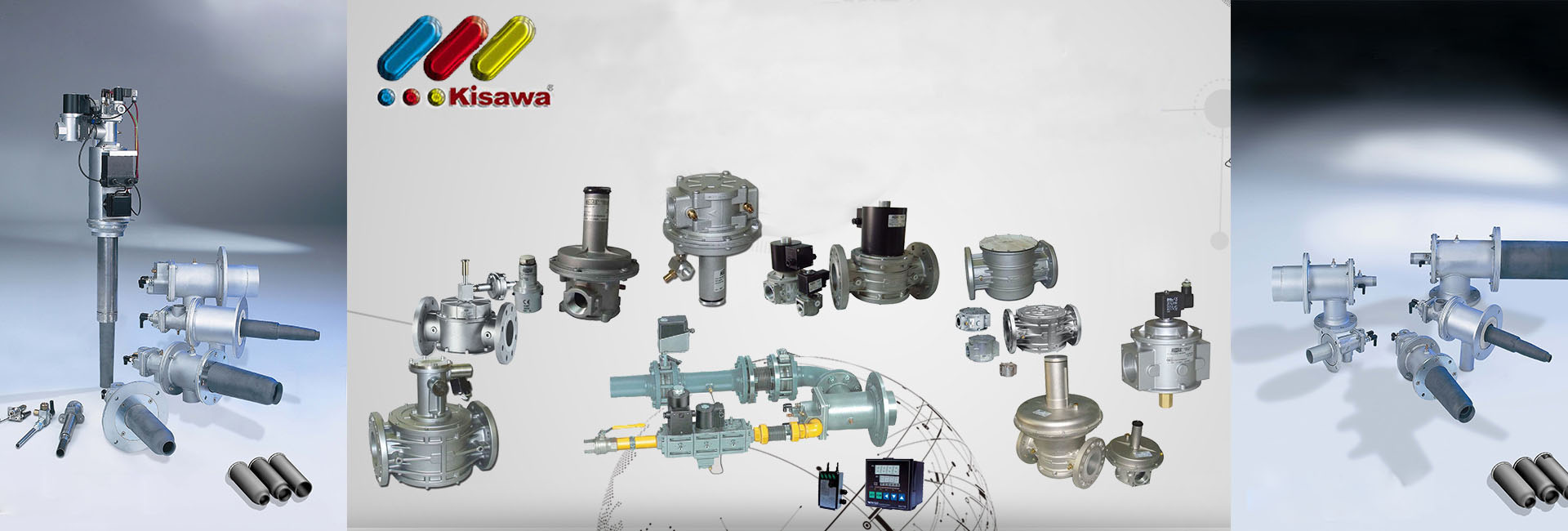
An industrial gas burner’s usage
-
An industrial gas burner is used to produce controlled heat by burning gas fuel (such as natural gas, LPG, or biogas) for industrial processes. Its main purpose is to provide stable, efficient, and adjustable thermal energy.
Main Uses of Industrial Gas Burners
1. Heating Industrial Equipment
2. Material Processing
-
Kilns (ceramic, cement, lime, rotary kilns)
-
Metal heat treatment (annealing, hardening, tempering)
-
Glass melting and forming
-
Asphalt and aggregate drying
3. Drying Processes
-
Food dryers
-
Textile dryers
-
Paper and pulp drying systems
-
Chemical and pharmaceutical drying
4. Combustion Systems
-
Incinerators
-
Flare systems
-
Waste gas and exhaust gas burning
5. Temperature Control Applications
-
Processes requiring precise flame and temperature control
-
Systems using proportional or modulating burners
Why Industrial Gas Burners Are Used
-
High thermal efficiency
-
Clean combustion with low emissions
-
Precise flame control
-
Reliable and continuous operation
-
Lower operating cost compared with many liquid fuels
Typical Industries
-
Cement & building materials
-
Metallurgy & steel
-
Ceramics & glass
-
Food processing
-
Chemical & petrochemical
-
Power & energy systems
-
1. What an industrial gas burner is used for
Industrial gas burners are widely used in:
Furnaces & ovens
Dryers
Heat treatment equipment
Incinerators
They convert chemical energy (gas) into thermal energy efficiently and safely.
2. Common fuel gases
Natural gas
LPG (propane / butane)
Biogas
Coke oven gas
Hydrogen blends (in modern systems)
3. Main types of industrial gas burners
By air supplyAtmospheric burner
No blower, uses natural air entrainment
Simple, low cost
Limited capacity and control
Forced-draft burner
Uses a fan or blower
Precise air–gas ratio
High efficiency, widely used in industry
By flame control
On–off burner
Simple operation
Larger temperature fluctuation
High–low burner
Two-stage flame control
Better temperature stability
Modulating burner
Continuous flame adjustment (0–100%)
Best for energy saving and process control
By flame shape
Long flame burner – kilns, tunnels
Short flame burner – compact furnaces
Flat flame burner – uniform heating
High-velocity burner – fast heat transfer
4. Main components
Burner body & nozzle
Gas solenoid valves
Gas pressure regulator
Air blower
Ignition system (spark or pilot)
Flame detector (UV / ionization)
Combustion controller
Gas filter & safety shut-off valves
5. Key performance indicators
When choosing a burner, focus on:
Heat output (kW / kcal / BTU)
Fuel compatibility
Flame stability
Turndown ratio
Combustion efficiency
Emissions (NOx, CO)
Safety standards (EN, CE, NFPA)
6. How to keep an industrial gas burner working well
Keep gas pressure stable
Clean burner nozzle regularly
Check ignition electrodes and flame sensor
Maintain correct air–fuel ratio
Inspect valves and seals for leakage
Calibrate controller periodically
Phone: 86 185 6630 3837
WhatsApp: 86 185 66303837
Email: ekelairn@gmail.com
Web: http://www.ekgas.com
-
Leave a comment