How to select an industrial gas solenoid valve for a gas train
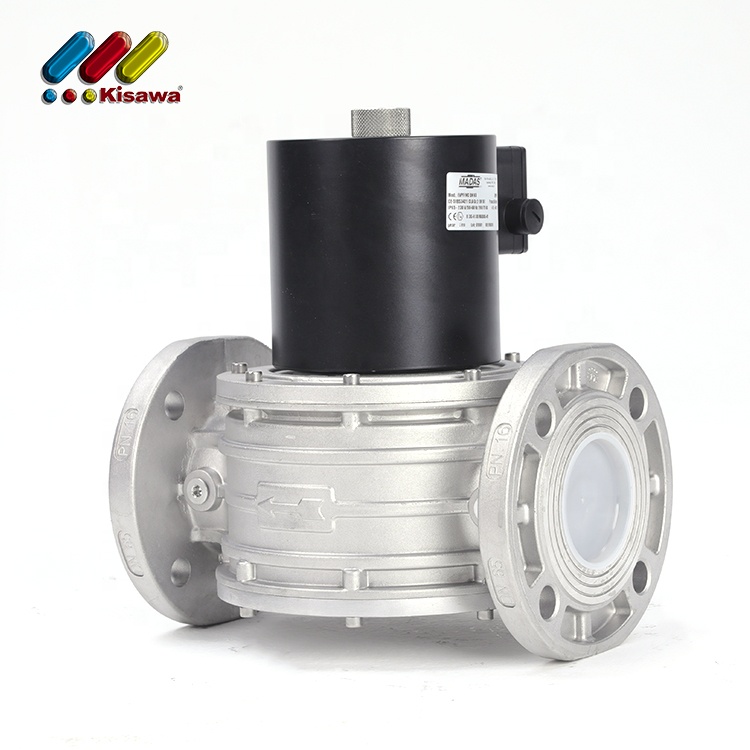
Selecting an industrial gas solenoid valve for a gas train is mainly about safety, compatibility, and correct sizing—because in a burner system, this valve is a critical safety shut-off device, often installed in double-valve configurations.
Here’s a practical, engineering-oriented selection guide:
1. Define the gas & application
Start with the basics:
-
Gas type: natural gas, LPG, biogas, hydrogen
-
Application: burner, boiler, kiln, furnace
-
Function: safety shut-off, control, or both
👉 Gas type determines body material and seal compatibility (e.g., NBR, FKM, PTFE).
2. Choose valve function (safety logic)
For gas trains, this is critical:
-
Normally Closed (NC) → standard choice
-
Closes automatically when power is lost (fail-safe)
-
-
Normally Open (NO) → only for special cases
👉 Most combustion systems require NC valves for safety shut-off.
3. Select valve type: direct vs pilot
Choose based on pressure and flow:
-
Direct-acting
-
Works at 0 pressure / low pressure
-
Fast response
-
Smaller flow capacity
-
-
Pilot-operated
-
Requires minimum differential pressure
-
Suitable for large flow / larger pipe sizes
-
More energy efficient
-
👉 Rule of thumb:
-
Small burner / low pressure → direct
-
Industrial gas train → usually pilot-operated
4. Match pressure & flow capacity
This is one of the most common mistakes.
-
Check:
-
Inlet pressure (min/max)
-
Flow rate (Nm³/h or m³/h)
-
Cv/Kv value
-
✔ Recommendation:
-
Valve rating should be ≥ 1.25–1.5× system pressure for safety margin
⚠️ Undersized valves → pressure drop, unstable flame
⚠️ Oversized valves → poor control accuracy
5. Temperature & environment
Consider both:
-
Gas temperature
-
Ambient temperature
-
Hazardous area (Zone 1 / Zone 2)
✔ Select:
-
High-temp seals (FKM/PTFE) for hot gas
-
ATEX / explosion-proof coils if required
6. Material selection
Typical options:
| Material | Use case |
|---|---|
| Brass | Clean natural gas |
| Aluminum | Gas trains / high flow |
| Stainless steel | Corrosive gas / harsh environment |
👉 Material must match gas composition + environment
7. Electrical & control requirements
Check:
-
Voltage: 24V DC / 24V AC / 110V / 230V
-
Duty cycle: continuous or intermittent
-
Response time (important for safety shut-off)
👉 Solenoid valves provide fast shut-off in milliseconds, critical for burner safety.
8. Connection & size
-
Threaded (small systems)
-
Flanged (industrial gas train)
✔ Match:
-
Pipe diameter (DN size)
-
Required flow capacity
9. Safety standards & certifications (VERY IMPORTANT)
For gas trains, never skip this:
-
EN 161 (Europe gas safety valves)
-
ATEX (explosion-proof)
-
CE / UL / DVGW
👉 Compliance ensures safe operation in industrial combustion systems.
10. Gas train-specific considerations
In real gas trains:
-
Use double solenoid valves (2× in series)
-
Add:
-
Gas pressure switch
-
Valve proving system (VPS)
-
-
Ensure:
-
Tight shut-off (Class A leak-tightness)
-
👉 These valves act as the primary safety barrier against gas leakage.
Quick selection checklist (engineering use)
Phone: +86 185 6630 3837
WhatsApp: +86 185 66303837
Email: ekelairn@gmail.com
Web.: http://ekgas.com
Leave a comment