


Complete Combustion Solutions for Aluminum Melting Furnaces
Aluminum melting requires high heat.
However, high heat alone is not enough.
A good furnace also needs stable combustion.
It needs accurate gas control.
It also needs good air control.
Most importantly, the whole system must work together.
That is where EKGAS can help.
EKGAS provides complete combustion solutions for aluminum melting furnaces. These solutions help improve heating, fuel efficiency, and system safety.
Why Combustion Control Matters

First, aluminum needs even heating.
Uneven heating can cause hot spots.
It can also slow down the melting process.
Poor combustion can create other problems.
For example, fuel use may increase.
Flame stability may also become worse.
Therefore, good combustion control is essential.
A complete system should control:
- Gas flow
- Air flow
- Air-fuel ratio
- Flame condition
- Furnace temperature
- Burner output
- Gas pressure
In addition, these factors affect each other.
For example, gas flow changes can affect the flame.
Air flow must also change with it.
So, the whole combustion system needs to work as one.
1. Choose the Right Burner
The burner is the heart of the furnace.
For aluminum melting, the burner must provide stable heat.
It must also match the furnace design.
A suitable burner can improve heat transfer.
It can also improve temperature uniformity.
For some furnaces, a high-speed burner is a good choice.
High-speed burners create strong gas circulation.
As a result, heat can spread more evenly.
This can help improve:
- Heating speed
- Temperature uniformity
- Flame stability
- Fuel efficiency
- Furnace performance
However, burner selection should not focus only on burner capacity.
You should also consider the furnace size.
Fuel type is important too.
Operating temperature also matters.
With the right selection, the burner can work more efficiently.
2. Keep the Air-Fuel Ratio Stable
Next, let’s look at the air-fuel ratio.
It is a key part of industrial combustion.
Too much air can waste heat.
Hot exhaust gas can carry heat away.
On the other hand, too little air can cause poor combustion.
It may also make the flame unstable.
Therefore, accurate air-fuel control is very important.
EKGAS can provide different control components for this purpose.
These may include:
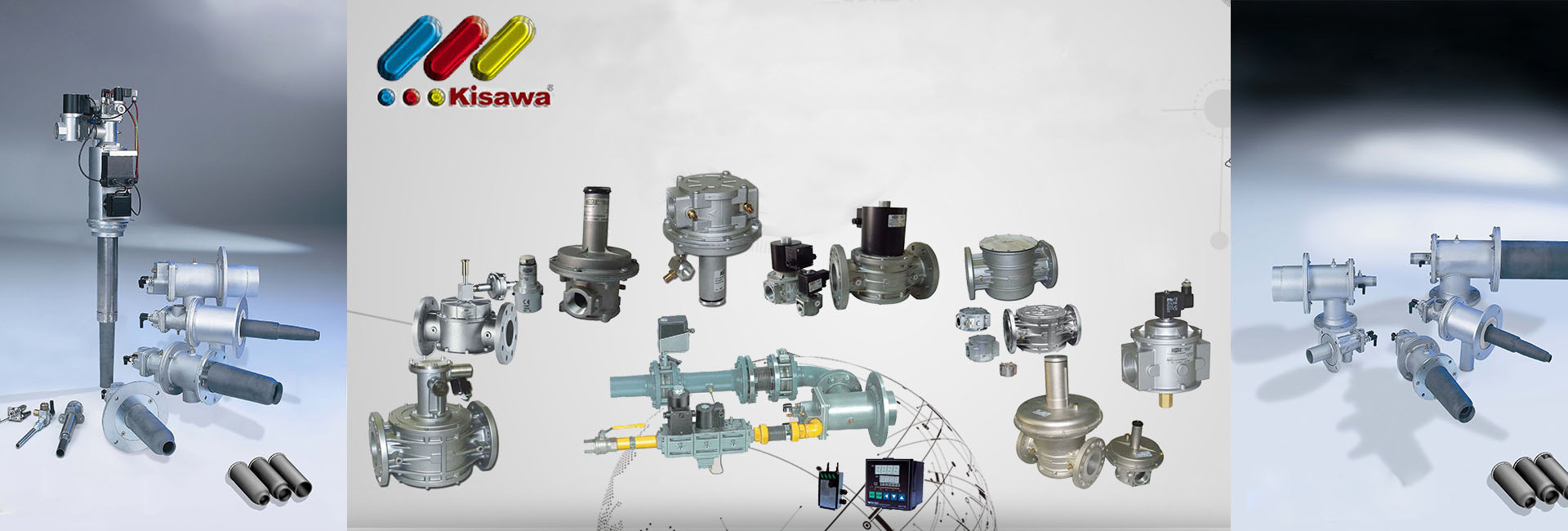
- Gas control valves
- Air control valves
- Gas regulators
- Proportional valves
- Electric actuators
- Air-gas ratio control systems
These components work together.
As a result, gas and air can stay within the required range.
The burner can then provide more stable heat.
At the same time, unnecessary fuel use can be reduced.
3. Build a Reliable Gas Train
Combustion efficiency is important.
However, safety comes first.
The gas train controls the fuel supply.
It also protects the burner system.
A typical gas train may include:
- Gas filter
- Gas pressure regulator
- Safety shut-off valve
- Solenoid valve
- Gas control valve
- Pressure switch
- Gas pressure monitor
Each component has a specific role.
For example, the regulator helps stabilize gas pressure.
The safety shut-off valve provides another layer of protection.
When an unsafe condition occurs, it can stop the gas supply.
Therefore, a good gas train improves system safety.
It also helps keep combustion stable.
EKGAS can configure gas train systems based on furnace requirements.
4. Use Smart Combustion Control
Modern furnaces need better control.
Manual adjustment is often not enough.
Instead, smart combustion control can make operation easier.
For example, the system can monitor furnace temperature.
It can also monitor gas and air pressure.
Then, the controller can adjust burner output.
As a result, the furnace can respond to changing loads.
This brings several benefits:
- More stable temperature
- Better fuel control
- Faster response
- Easier operation
- Better combustion performance
In addition, automatic control can reduce manual work.
That makes daily furnace operation much easier.
5. Improve Heat Distribution with High-Speed Burners
Heat distribution is another key issue.
Some furnaces have uneven temperature zones.
This can affect melting quality.
A high-speed burner can help solve this problem.
It creates strong gas movement inside the furnace.
Therefore, hot gases can circulate more effectively.
Heat can then reach more areas of the furnace.
EKGAS high-speed burners are designed for industrial heating applications.
They can be used where strong circulation is needed.
They are also suitable for fast heating applications.
However, the burner should always match the furnace design.
6. Reduce Fuel Costs with Better Control
Fuel costs are a major concern for aluminum producers.
Therefore, energy efficiency matters.
However, saving fuel does not simply mean reducing burner output.
Instead, the system should use fuel more effectively.
A good combustion system can improve:
- Burner efficiency
- Air-fuel control
- Heat transfer
- Temperature control
- Burner modulation
For example, the burner does not always need to run at full fire.
When the furnace reaches the target temperature, output can be reduced.
The burner can then maintain the required heat.
As a result, fuel consumption can be better controlled.
Over time, this can help reduce operating costs.
7. Consider Low-NOx Combustion
Energy efficiency is important.
However, emissions also matter.
Poor combustion can increase unwanted emissions.
Therefore, emission control should be part of the system design.
For applications with strict emission limits, low-NOx burners can be considered.
At the same time, accurate air-fuel control is also important.
Stable combustion can help maintain better operating conditions.
As a result, the system can support both energy efficiency and emission control.
8. Why Choose a Complete Combustion Solution?
A burner does not work alone.
It needs gas.
It needs air.
It also needs control and safety equipment.
Therefore, all components should work together.
A complete EKGAS combustion solution can include:
- Industrial gas burners
- High-speed burners
- Gas train systems
- Gas pressure regulators
- Safety gas valves
- Air-fuel ratio control systems
- Electric actuators
- Combustion control systems
- Flame monitoring equipment
Each system can be selected according to the furnace.
The fuel type is also considered.
So are furnace size, capacity, temperature, and control requirements.
This makes the solution more practical.
9. EKGAS Combustion Solutions for Aluminum Furnaces
Every aluminum melting furnace is different.
Some need fast heating.
Others need better temperature uniformity.
Some require simple control.
Others need full automatic control.
Therefore, one standard solution cannot fit every furnace.
At EKGAS, we focus on the actual application.
First, we understand the furnace.
Then, we select the right burner.
Next, we match the gas and air control components.
Finally, we integrate the safety and control systems.
This approach creates a complete combustion solution.
It also makes system operation easier and more reliable.
Conclusion
A good aluminum melting furnace needs more than a powerful burner.
It needs stable combustion.
It needs accurate air-fuel control.
It also needs reliable gas safety.
Most importantly, all components must work together.
With the right combustion solution, furnace performance can improve.
Heating can become more stable.
Fuel use can also be better controlled.
At the same time, operators can enjoy easier system management.
With industrial burners, gas train systems, air-fuel control, and smart combustion technology, EKGAS provides complete combustion solutions for aluminum melting furnaces.
Better combustion. Better heat control. Better furnace performance.
Latest Posts


Leave a comment