


How to Build a Complete Combustion System for an Aluminum Melting Furnace
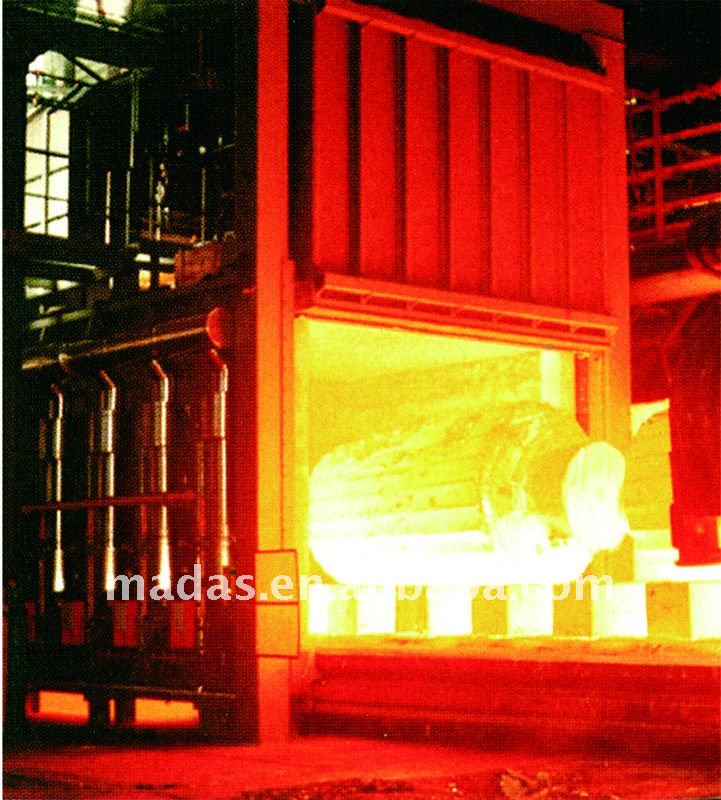
An aluminum melting furnace may look simple.
Heat the aluminum. Melt it. Hold the temperature. Then pour.
But anyone who has worked with a melting furnace knows that the combustion system is not that simple.
A burner can have enough capacity, yet the furnace may still heat slowly.
The flame may look strong, but fuel use can be high.
One area may be extremely hot, while another area is still cold.
In many cases, the problem is not the burner alone.
The burner, gas train, combustion air, air-fuel ratio, furnace pressure, temperature control, and exhaust system all need to work together.
That is what makes a complete combustion solution.
Start with the Furnace, Not the Burner
One of the most common mistakes is choosing the burner too early.
Before selecting a burner, we need to understand the actual furnace.
How much aluminum does it hold?
How many tons need to be melted per hour?
How fast should the furnace reach the target temperature?
What fuel is available?
What is the gas pressure?
What are the furnace dimensions?
Where are the doors and exhaust outlets?
These details matter.
For example, two aluminum melting furnaces with the same capacity may need completely different burner layouts.
The reason is simple.
The furnace geometry controls how heat moves inside the furnace.
So, the right approach is to calculate the required heat load first. Then select the burner capacity and quantity.
A Bigger Burner Is Not Always Better
This is something we often see in real projects.
A customer wants faster melting, so the first idea is to install a larger burner.
It sounds logical.
But it does not always work that way.
An oversized burner can create excessive flame momentum.
The flame may hit the aluminum surface too strongly.
Local temperatures can become too high.
Oxidation may increase.
At the same time, more heat can leave through the exhaust.
So, the real question is not:
“How big should the flame be?”
The better question is:
“How efficiently can we transfer heat to the aluminum?”
That difference is very important.

Flame Shape Matters More Than Flame Size
In an aluminum melting furnace, flame design deserves special attention.
The burner position, angle, flame length, and flame velocity all affect heat distribution.
If the burners are aimed at the same area, that area may become very hot.
But other parts of the furnace may remain cooler.
A better burner layout can create stronger circulation inside the furnace.
Hot gases move through the furnace.
Heat is transferred over a larger area.
As a result, temperature uniformity improves.
For this reason, burner installation should never be treated as simply “cut a hole and install the burner.”
The burner and furnace geometry need to be designed together.
Air-Fuel Ratio: Small Adjustment, Big Difference
Even a good burner will not perform well if the air-fuel ratio is wrong.
Too much air means more flue gas.
And more flue gas means more heat can be carried out of the furnace.
Too little air creates another problem.
Combustion may become incomplete, and CO can increase.
The flame can also become unstable.
Therefore, gas and combustion air need to be controlled together.
This is where gas control valves, air control valves, ratio regulators, and electric actuators become important.
And there is one more point.
Do not adjust the air-fuel ratio only at full load.
The burner should also be checked at low, medium, and high firing rates.
A system that works well at full load may behave very differently at low fire.
Stable Gas Pressure Is the Foundation
Sometimes operators tell us:
“The burner worked well in the morning, but the flame became weak in the afternoon.”
Before replacing the burner, check the gas pressure.
If the gas supply pressure changes, the fuel flow changes with it.
This can affect flame stability and heat output.
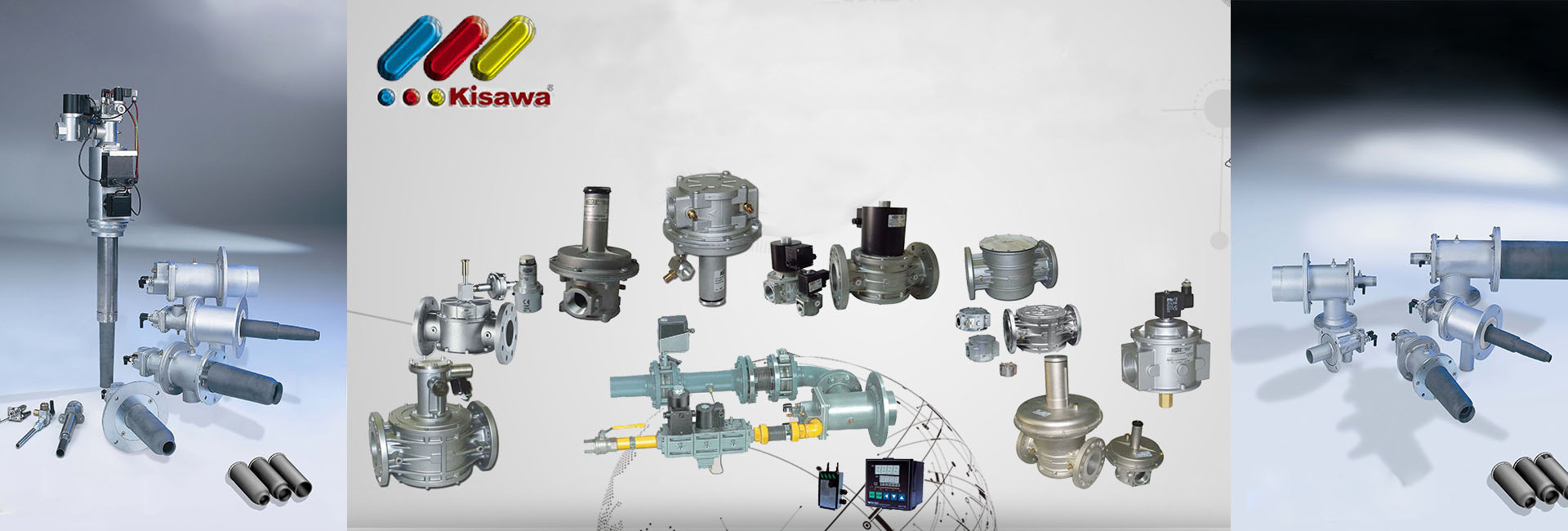
A typical gas train may include:
- Gas filter
- Gas pressure regulator
- Pressure gauge or transmitter
- Safety shut-off valve
- Solenoid valve
- Gas control valve
- Pressure switches
These components may not look as impressive as the burner.
But on a real furnace, they are extremely important.
A stable gas train gives the burner a stable fuel supply.
And stable fuel supply means more consistent combustion.
Do Not Ignore the Combustion Air System
Fuel is only one side of combustion.
The air system matters just as much.
A typical system may include a combustion air fan, air valve, ductwork, pressure measurement, and flow control.
If the air pressure changes, the flame can change with it.
This is especially noticeable when the burner is operating at low fire.
Therefore, the gas side and air side should be adjusted as one system.
For larger furnaces, combustion air preheating can also be considered.
Instead of allowing all the heat to leave with the exhaust gas, part of that heat can be recovered and used to preheat the combustion air.
This can improve overall thermal efficiency.
Keep the Furnace Temperature Stable
Melting aluminum is not simply about reaching a high temperature.
Temperature stability is just as important.
If the furnace temperature is too low, melting takes longer.
If it is too high, energy use can increase. Excessive heat can also increase oxidation and thermal load on the furnace lining.
A practical control system may use:
Temperature sensor → PLC → actuator → gas control valve → burner
When the temperature drops, the firing rate increases.
As the temperature approaches the set point, the firing rate decreases.
Once the target temperature is reached, the system can move into a lower firing rate for holding.
This is much better than simply running the burner at full fire all the time.
Furnace Pressure Is Easy to Overlook
There is another factor that can quietly increase energy consumption:
furnace pressure.
If the furnace is under too much negative pressure, cold air can enter through doors, inspection openings, and small gaps.
That cold air needs to be heated.
So, fuel consumption increases.
On the other hand, excessive positive pressure can push hot gases out of the furnace.
That is wasted heat.
Therefore, burner firing rate and exhaust flow need to be balanced.
Proper furnace pressure control helps keep combustion more stable and reduces unnecessary heat loss.
What About the Exhaust Gas?
The exhaust system is sometimes treated as an afterthought.
It should not be.
The exhaust system affects furnace pressure, heat loss, and overall energy efficiency.
A complete system may include:
Furnace flue → Exhaust duct → Exhaust fan → Heat recovery system → Environmental equipment → Stack
If the exhaust temperature is very high, there may be an opportunity to recover useful heat.
For large aluminum melting furnaces, regenerative combustion is one possible solution.
The system stores heat from hot exhaust gas and uses that heat to preheat combustion air.
In this way, part of the heat that would normally go up the stack can be returned to the combustion process.
Safety Comes Before Efficiency
Energy efficiency is important.
But combustion safety always comes first.
A complete furnace combustion system should have the necessary safety functions for the specific installation.
These may include:
- Pre-purge
- Ignition control
- Flame detection
- Gas low-pressure protection
- Gas high-pressure protection
- Air pressure monitoring
- Over-temperature protection
- Emergency shutdown
- Safety shut-off valves
If the flame goes out, the system should respond according to the designed safety sequence.
The same applies when gas pressure, air pressure, or other critical conditions become abnormal.
A fuel-saving system is only useful when it is also safe and reliable.
What Does a Complete Solution Look Like?
When we look at the entire aluminum melting furnace, the combustion system can be divided into several connected parts.
Burner system
Provides the required flame and heat release.
Gas train
Provides filtering, pressure regulation, safety shut-off, and fuel control.
Combustion air system
Provides stable air flow to the burners.
Control system
Monitors temperature and adjusts the firing rate.
Exhaust system
Removes flue gas and helps control furnace pressure.
Heat recovery system
Recovers useful heat from high-temperature exhaust gas when the application allows it.
Safety system
Protects the furnace and operators during startup, operation, and abnormal conditions.
The important point is that these systems should not be designed separately.
They need to work together.
Want to Reduce Fuel Consumption? Check the Whole System
When fuel consumption suddenly increases, replacing the burner is not always the answer.
Start with the operating data.
Check the gas flow.
Check the combustion air.
Check O₂ and CO in the flue gas.
Check exhaust temperature.
Check furnace pressure.
Check the temperature curve.
And most importantly, check the fuel consumption per ton of aluminum melted.
Sometimes the problem is simply an incorrect air-fuel ratio.
Sometimes the exhaust system is pulling too much air through the furnace.
Sometimes the furnace lining has deteriorated.
And sometimes the burner layout is not suitable for the furnace.
That is why a good energy-saving project should look at the entire combustion system.
EKGAS Complete Combustion Solutions for Aluminum Melting Furnaces
At EKGAS, we understand that an aluminum melting furnace needs more than just a burner.
We provide combustion solutions based on the actual furnace design and production requirements.
Depending on the application, the system can include:
Industrial burners, gas trains, pressure regulators, combustion air systems, electric actuators, ignition systems, flame detection, temperature control, PLC control, exhaust systems, and heat recovery solutions.
From heat-load calculation and burner selection to installation and commissioning, every part of the system needs to match the furnace.
Because in the end, a good aluminum melting furnace combustion system is not about making the biggest flame.
It is about getting the heat to the right place.
It is about stable combustion.
It is about faster and more uniform melting.
And, of course, it is about using fuel more efficiently without compromising safety and furnace performance.
EKGAS — Complete Industrial Combustion Solutions for Aluminum Melting Furnaces.
Phone
86-185-7653-8308
Whatsapp
86-185-76538308
Latest Posts


Leave a comment