


Heat Treatment Furnace Capacity Too Low? Upgrade Your Combustion System Before Replacing the Furnace
How EKGAS combustion solutions help improve heating performance, temperature control, and production efficiency.
In many heat treatment plants, production capacity reaches a limit long before the furnace reaches the end of its service life.
The furnace is still running. The burners still ignite. However, heating takes too long, temperature recovery is slow, and production schedules become harder to maintain.
When this happens, replacing the entire furnace may seem like the obvious solution.
But before making such a major investment, there is another question worth asking:
Is the combustion system holding back your production capacity?
At EKGAS, we believe this is where a proper combustion system assessment should begin.
In many cases, upgrading the burners and combustion controls can improve furnace performance without rebuilding the entire production line.
Here is what engineers should look at when planning a heat treatment combustion upgrade.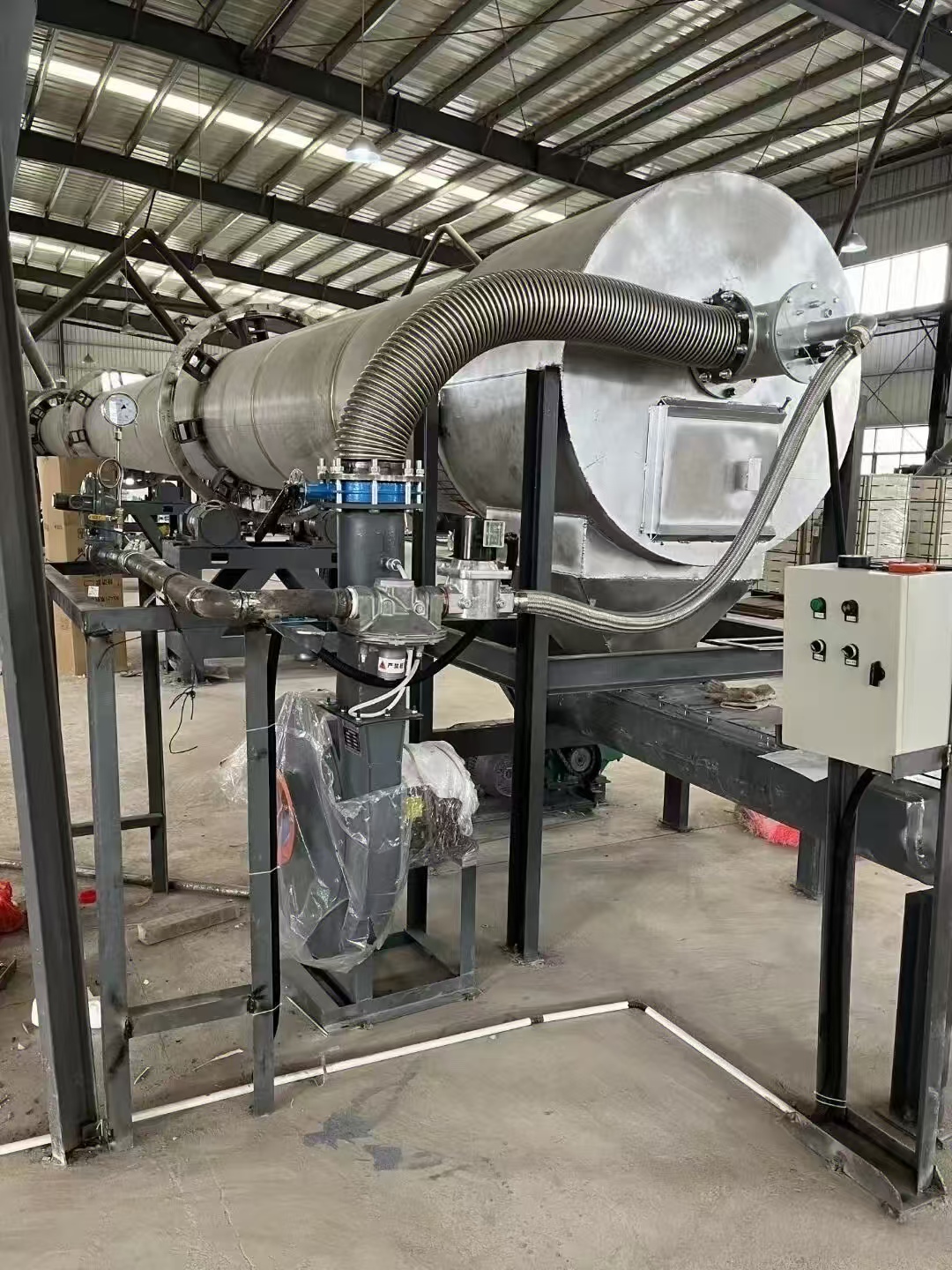
1. Slow Heating? The Problem May Not Be Burner Capacity Alone
A common complaint in heat treatment plants is slow temperature rise.
The furnace takes too long to reach the target temperature. Once production loads increase, the problem becomes even more obvious.
The first thought is often:
“Do we need a larger burner?”
Not necessarily.
Burner output is only one part of the heating system. Actual heating performance also depends on:
- Available gas pressure.
- Combustion air supply.
- Furnace back pressure.
- Burner operating range.
- Furnace insulation.
- Flue gas discharge.
- Burner location and flame direction.
- Workpiece loading and heat demand.
For example, a burner may have enough rated capacity on paper. However, if gas pressure drops during operation, the actual heat input may be lower than expected.
Likewise, insufficient combustion air or poor furnace pressure control can affect burner performance.
Before increasing burner size, engineers should first identify where the heat input is being lost.
This is also the approach EKGAS takes when evaluating combustion equipment for industrial heating applications.
2. More Heat Does Not Always Mean Better Heating
A heat treatment furnace does not simply need more heat.
It needs heat in the right place, at the right time, and in the right amount.
This is especially important for continuous heat treatment lines.
Workpieces move through different heating zones. Each zone has its own temperature requirements and heat load.
If heat is concentrated in one area while another zone struggles to reach its target temperature, the entire production line may have to follow the slowest section.
This creates a hidden production bottleneck.
What Should Be Checked?
During a combustion system assessment, engineers usually examine:
- Burner installation positions.
- Flame length and flame shape.
- Heat distribution inside the furnace.
- Airflow and flue gas circulation.
- Temperature differences between heating zones.
- Heat loss through furnace openings.
Depending on the furnace design, solutions may include high-speed burners, improved burner placement, staged combustion, or independent zone control.
At EKGAS, burner selection starts with the furnace application rather than a standard equipment list.
The objective is not simply to create a larger flame.
The objective is to deliver heat more evenly and efficiently throughout the furnace.
3. Old Combustion Controls Can Limit Production Flexibility
Many older heat treatment furnaces still use basic on/off burner control.
When the temperature drops, the burner starts.
When the temperature reaches the setpoint, the burner stops.
This approach is simple and reliable in some applications. However, it may become less effective when production loads change frequently.
For example, when more workpieces enter the furnace, the temperature may drop sharply.
The burner then operates at high output to recover the temperature. As a result, the furnace may experience temperature overshoot.
Operators are forced to adjust settings repeatedly.
Over time, this can lead to:
- Unstable furnace temperatures.
- Frequent burner cycling.
- Uneven heating.
- Unnecessary gas consumption.
- Longer process recovery times.
Why Consider Modulating Combustion?
A modulating combustion system adjusts burner output according to actual heat demand.
When the furnace approaches the target temperature, the burner reduces its output.
When the workpiece load increases, the system can provide more heat.
This creates smoother temperature control and greater operating flexibility.
For heat treatment lines handling different products or changing production loads, this can make a meaningful difference.
EKGAS combustion control solutions can be configured around the required heating process, burner capacity, and control philosophy.
The right setup depends on the actual furnace conditions and process requirements.
4. Burner Turndown Ratio Matters More Than Many Plants Expect
When selecting an industrial burner, maximum capacity is often the first specification people check.
However, minimum stable firing capacity is just as important.
A heat treatment furnace does not require the same amount of heat during every stage.
Consider a typical process:
- Cold start: High heat input is needed for rapid temperature rise.
- Approaching setpoint: Burner output needs to decrease.
- Soaking stage: A stable, lower heat input may be sufficient.
- Continuous loading: Heat demand changes as workpieces enter and leave the furnace.
If the burner cannot operate stably at low fire, it may cycle on and off too often.
That can affect temperature stability and increase wear on system components.
Therefore, burner selection should answer more than one question.
Not just:
“How much maximum power can this burner deliver?”
But also:
“Can this burner operate reliably across the entire heat demand range?”
This is where the correct burner turndown ratio becomes important.
When EKGAS evaluates burner options, operating range, fuel conditions, and furnace heat demand should all be considered together.
A burner that looks suitable on paper may not be the right choice for every application.
5. Improving Production Does Not Always Require Rebuilding the Furnace
One concern we often hear from plant managers is:
“Will a combustion upgrade require us to shut down the entire production line?”
The answer depends on the existing furnace structure and combustion system.
In some cases, a targeted upgrade may be sufficient.
Option 1: Replace Existing Burners
This approach may be suitable when:
- Burners are aging.
- Heat output is insufficient.
- Flame performance has declined.
- Existing burners no longer match production requirements.
The furnace structure can potentially be retained while burner performance is improved.
EKGAS can help assess burner specifications and application requirements for replacement projects.
Option 2: Upgrade the Combustion Control System
This may be suitable when the burners remain usable but the control system lacks precision.
Possible improvements include:
- Modulating gas valves.
- Electric actuators.
- Air-gas ratio control.
- Temperature control systems.
- Burner management systems.
- Safety interlocks.
Option 3: Optimize the Complete Combustion System
For more complex problems, a broader upgrade may be required.
This can include:
- Industrial burners.
- Gas train assemblies.
- Combustion air systems.
- Gas pressure regulation.
- Control cabinets.
- Flame detection.
- Furnace pressure management.
The right solution depends on the actual condition of the equipment.
A good retrofit does not replace components blindly. It improves the parts that are limiting performance.
That principle is central to practical combustion engineering.
6. Gas Savings Should Not Come at the Expense of Heating Performance
When discussing combustion upgrades, energy savings are always an important topic.
However, reducing gas consumption is not as simple as reducing fuel supply.
If the furnace cannot maintain the required temperature, lower gas consumption may simply mean lower production.
The real goal is different:
Use fuel more effectively while maintaining the required heating performance.
Several factors can contribute to this.
Better Air-Gas Ratio Control
Too much excess air can increase flue gas heat losses.
Too little air can lead to incomplete combustion and unstable operation.
Proper air-gas ratio control helps maintain a more suitable combustion condition.
Better Heat Distribution
When heat reaches the workpieces more effectively, the furnace may require less wasted energy to achieve the same process result.
Automatic Load Adjustment
The combustion system can respond to changing heat demand instead of operating at unnecessarily high output.
Reduced Temperature Fluctuation
Stable furnace temperatures can reduce repeated heating and cooling cycles during production.
EKGAS combustion solutions can be selected and configured to address these requirements according to the furnace design.
Of course, actual energy savings depend on furnace structure, operating conditions, insulation, fuel quality, and process requirements.
A reliable upgrade should be evaluated using real operating data rather than assumed savings.
7. What Should Engineers Check Before Upgrading a Heat Treatment Combustion System?
A successful upgrade begins with a proper assessment.
Before selecting burners or control equipment, engineers should understand how the furnace currently operates.
Furnace Structure
Is it a continuous furnace, mesh belt furnace, roller hearth furnace, or batch furnace?
Different furnace designs require different combustion arrangements.
Production Requirements
What is the current output?
What production capacity is required?
How much does the workpiece load vary?
Temperature Requirements
What is the target temperature?
How precise must temperature control be?
Are different zones operating at different temperatures?
Fuel Conditions
What fuel is being used?
Is the gas pressure stable?
Is sufficient combustion air available?
Existing Equipment
What type of burners are installed?
How old are the gas valves and actuators?
Does the existing control system support modulation?
Safety Requirements
Are flame detection, gas shut-off, and safety interlocks functioning properly?
These details determine whether the project should focus on burner replacement, control upgrades, or a complete system redesign.
At EKGAS, understanding the actual operating conditions is an important part of developing a suitable combustion solution.
8. How Do You Know If the Upgrade Actually Works?
A combustion upgrade should be measured by production results, not just by how smoothly the burners operate.
Before and after the upgrade, it is useful to compare:
|
Performance Indicator
|
What to Measure
|
| — | — |
|
Heating time
|
Time required to reach the target temperature
|
|
Temperature uniformity
|
Temperature differences between zones
|
|
Production output
|
Workpieces processed per hour or batch
|
|
Gas consumption
|
Fuel used per ton or batch
|
|
Temperature stability
|
Fluctuations during heating and soaking
|
|
Equipment downtime
|
Burner faults, ignition failures, and unplanned stops
|
These measurements provide a clearer picture of the upgrade’s actual value.
For example, if the furnace reaches temperature faster but gas consumption increases sharply, the result needs further analysis.
Likewise, lower gas consumption is not necessarily a success if production output declines.
The best combustion upgrade is one that balances heating performance, energy use, reliability, and production requirements.
This is why EKGAS recommends evaluating combustion improvements against measurable operating targets rather than relying on general claims.
9. A Practical Combustion System for Heat Treatment Lines
Based on typical industrial requirements, a suitable combustion system should offer several key features.
Stable Operation
The burners should operate reliably during long production cycles.
Flexible Control
The system should respond to changing heat demand and different process stages.
Uniform Heating
Flame characteristics and burner arrangement should match the furnace structure.
Efficient Fuel Use
The system should avoid unnecessary fuel consumption and excessive heat loss.
Easy Maintenance
Burners, valves, actuators, and control components should be accessible for inspection and service.
Reliable Safety Protection
Flame monitoring, gas shut-off, and safety interlocks are essential parts of a properly designed system.
These requirements may sound basic.
However, achieving them together requires careful coordination between the burner, gas train, air supply, control system, and furnace design.
EKGAS provides industrial combustion equipment and solutions designed around the specific needs of heating applications.
The focus is not just on individual components, but on how the complete combustion system performs in actual production.
Conclusion: Unlock More Capacity from Your Existing Heat Treatment Line
When production capacity reaches its limit, replacing the entire furnace is not always the only solution.
Sometimes, the real opportunity lies in upgrading the combustion system.
By improving burner selection, heat distribution, air-gas ratio control, and temperature management, existing heat treatment equipment may achieve better heating performance and greater production flexibility.
The key is to start with the actual problem.
Is the furnace heating too slowly?
Are temperature differences affecting product quality?
Is the burner control too basic for current production demands?
Is the gas supply limiting burner output?
These questions help identify where an upgrade can deliver meaningful results.
A combustion system upgrade is not simply about installing a more powerful burner. It is about making the entire heating process work better.
For heat treatment manufacturers looking to improve production efficiency without immediately investing in a new furnace, a professional combustion system assessment is a practical place to begin.
Why Choose EKGAS for Heat Treatment Combustion Solutions?
EKGAS focuses on industrial combustion equipment and combustion system solutions for demanding heating applications.
Our product and solution range includes:
- Industrial gas burners.
- Gas train assemblies.
- Air-gas ratio control systems.
- Combustion control equipment.
- Electric actuators.
- Customized combustion solutions.
Every heat treatment furnace has its own operating conditions.
That is why burner selection and system configuration should be based on actual fuel requirements, furnace structure, temperature targets, and production needs.
Whether you are planning a burner replacement, combustion control upgrade, or complete heating system improvement, EKGAS can support your evaluation with application-focused combustion solutions.
EKGAS — Combustion Solutions for Better Industrial Heating Performance.
Phone
86-185-7653-8308
Whatsapp
86-185-76538308
Latest Posts


Leave a comment