




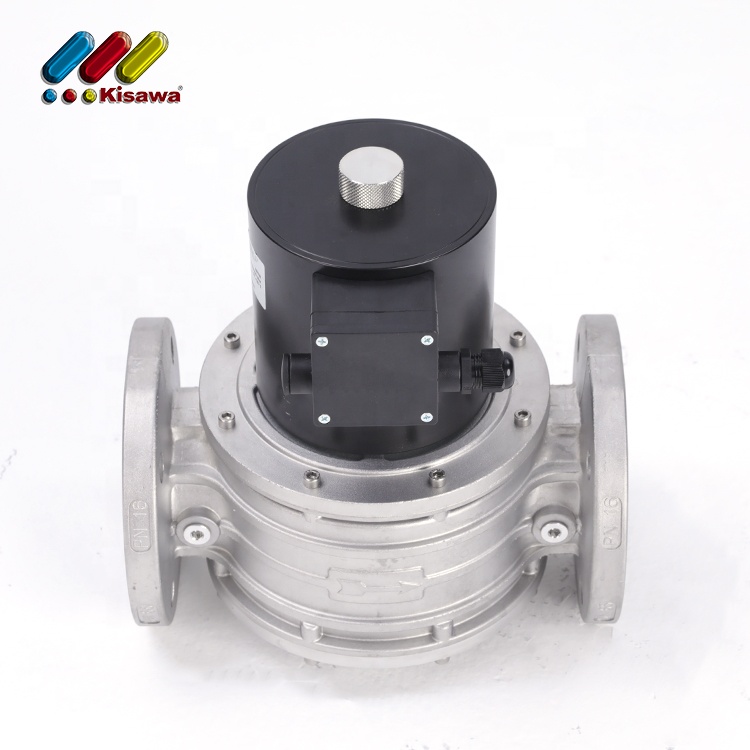
How to choose an industrial gas solenoid valve for a gas train
How to choose an industrial gas solenoid valve for a gas train?
Quick checklist and steps to select an industrial gas solenoid valve for a gas train:
1. Define service and requirements
• Gas type: natural gas, LPG, hydrogen, nitrogen, methane, fuel gas mix — list composition, dew point, contaminants.
• Function: shutoff, safety-trip, pilot control, metering.
• Normally closed (NC) or normally open (NO); fail-safe requirement on loss of power.
• Operating environment: indoor/outdoor, ambient temperature range, corrosive/clean.
1. Pressure and flow parameters
• Maximum operating pressure and test/MAWP.
• Minimum and maximum working pressures and any pressure differentials.
• Required flow rate (SCFM or Nm3/h) and desired pressure drop.
• Calculate required Cv (or Kv) for the valve at worst-case conditions.
1. Valve type and actuation
• Direct-acting vs. pilot-operated: direct for small or low-flow/low-pressure drop;
pilot-operated for larger flows/higher pressures with lower power consumption.
• Orifice size, Cv, and response time needed for safety/trip performance.
• Required cycle speed and duty cycle (continuous, intermittent).
1. Materials and sealing
• Wetted materials compatible with the gas: brass is common for natural gas/LPG;
stainless steel for corrosive gases or H2.
• Seals: Viton, PTFE, EPDM, Buna-N depending on gas/temperature/compatibility.
• Temperature ratings of elastomers.
Phone: 86 185 6630 3837
WhatsApp: 86 185 66303837
Email: ekelairn@gmail.com
Web.: http://ekgas.com
Latest Posts

July 28, 2025
Do you know electric actuator?

April 13, 2026
How to keep an industrial gasl regulator works well

April 11, 2026
How to keep an industrial gas filter works well

April 10, 2026
How to select a good gas burner for a gas train
April 9, 2026
How to select a good gas fitler for a gas train

April 8, 2026

Leave a comment