

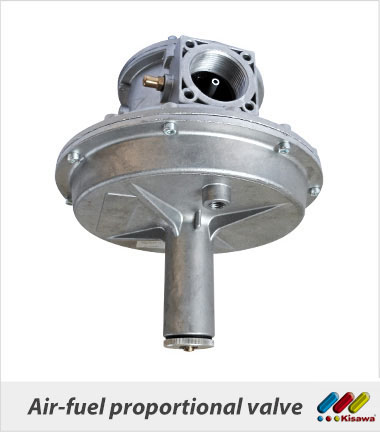
How to select an industrial gas proportional valve
Selecting an industrial gas proportional valve (modulating valve) is critical for achieving stable combustion control, accurate fuel-air ratio, and safety in a gas train. Here’s a practical, engineering-focused guide:
1. Define Your Application Requirements
Start with the operating conditions:
-
Fuel type: Natural gas, LPG, biogas, etc. (affects material compatibility and Cv sizing)
-
Flow rate range:
-
Minimum flow (turndown)
-
Maximum flow (full load)
-
-
Control objective:
-
Pressure control
-
Flow control
-
Air–gas ratio control (common in burners)
-
-
Response time:
-
Fast (process heating, ovens)
-
Moderate (boilers)
-
2. Flow Capacity (Cv / Kv Sizing)
This is the most critical parameter.
-
Calculate required Cv (or Kv) based on:
-
Inlet pressure (P1)
-
Outlet pressure (P2)
-
Gas type and temperature
-
Maximum flow rate
-
👉 Rule of thumb:
-
Choose a valve where normal operating flow is 30–70% of max Cv
-
Avoid oversizing → leads to unstable control and poor modulation
3. Pressure Range & Control Type
Inlet Pressure Range
-
Ensure compatibility with upstream regulator
-
Typical: 20 mbar – several bar
Control Mode
-
Proportional (analog):
-
0–10 V
-
4–20 mA (industry standard)
-
-
Closed-loop capable (with controller):
-
For precise combustion systems
-
4. Turndown Ratio (Modulation Range)
-
Defines how well the valve handles low fire vs high fire
-
Typical values:
-
5:1 → basic systems
-
10:1 or higher → high-performance burners
-
👉 Higher turndown = better energy efficiency and flame stability
5. Response & Accuracy
-
Fast response → better flame control
-
Hysteresis & repeatability:
-
Look for ≤ ±1–2% for precision systems
-
6. Safety & Certifications (VERY IMPORTANT)
For industrial gas systems (especially in Europe):
-
EN 161 (automatic shut-off valves)
-
EN 88 / EN 126 (pressure regulators, if integrated)
-
CE certification
-
SIL / IEC 61508 (if required for safety systems)
👉 Often proportional valves are used together with safety shut-off valves
7. Valve Type & Design
Common types:
a) Proportional Solenoid Valve
-
Fast response
-
Compact
-
Good for small–وسطة systems
b) Motorized Control Valve
-
Higher precision
-
Better for large flow / high pressure
-
Slower but more stable
c) Butterfly + Actuator
-
For large pipelines
-
Cost-effective at high flow
8. Material & Gas Compatibility
-
Aluminum, brass, or stainless steel
-
Check compatibility for:
-
Biogas (corrosion, H₂S)
-
LPG (sealing materials)
-
9. Electrical & Control Integration
-
Input signal: 0–10 V or 4–20 mA
-
Feedback signal (optional): position feedback
-
Power supply: 24 VDC / 230 VAC
10. Environmental Conditions
-
Ambient temperature range
-
IP protection (IP54, IP65…)
-
Hazardous area (ATEX if needed)
11. Typical Brands (Industrial Standard)
-
Siemens (VGG / VGF series)
-
Dungs
-
Honeywell (Kromschröder)
-
Bosch Thermotechnology
-
ASCO
12. Simple Selection Workflow
-
Define gas type + max flow
-
Calculate required Cv/Kv
-
Confirm pressure range (P1, P2)
-
Choose control signal (4–20 mA recommended)
-
Check turndown ratio
-
Verify certifications (CE, EN 161, etc.)
-
Match pipe size & connection
-
Ensure compatibility with burner control system
13. Common Mistakes to Avoid
-
Oversized valve → unstable flame
-
Ignoring minimum controllable flow
-
No safety shut-off valve in system
-
Wrong signal type (mismatch with PLC)
-
Ignoring pressure drop
- Phone: +86 185 6630 3837
WhatsApp: +86 185 66303837
Email: ekelairn@gmail.com
Web.: http://ekgas.com
Leave a comment
