

How to select an industrial gas solenoid valve for a gas train
Selecting an industrial gas solenoid valve for a gas train is a safety-critical task. These valves are not just for control—they are primary shut-off devices in burner systems—so selection must prioritize safety, compliance, and reliability.
Here’s a practical engineering guide used in combustion systems:
1) Define the role in the gas train
In a typical gas train:
-
Two solenoid valves in series are used as safety shut-off valves
-
They must close instantly on fault (milliseconds) to stop gas flow
👉 So your valve must be:
-
Fast acting
-
Fail-safe (usually Normally Closed)
-
Certified for safety shut-off duty
2) Match gas type (media compatibility)
Different gases affect materials and seals:
-
Natural gas / methane → standard brass or aluminum OK
-
LPG / propane / butane → compatible elastomers required
-
Corrosive / special gas → stainless steel
✔ Always confirm:
-
Body material
-
Seal material (e.g., NBR, FKM)
➡ Wrong material = leakage or seal failure
3) Pressure & temperature selection (critical)
You must match real operating conditions:
Pressure
-
Valve rating should be ≥ 1.25–1.5× system pressure
-
Consider:
-
Max inlet pressure
-
Minimum differential pressure
-
Temperature
-
Check:
-
Gas temperature
-
Ambient temperature
-
-
Typical industrial range:
-
−20°C to +80°C (standard)
-
Higher for furnaces
-
4) Flow capacity (Kv / Cv sizing)
This determines if your burner gets enough gas:
-
Too small → pressure drop, poor combustion
-
Too large → unstable control
✔ Select based on:
-
Required gas flow (Nm³/h)
-
Allowable pressure drop (typically <10%)
5) Valve type & function
(a) Function
-
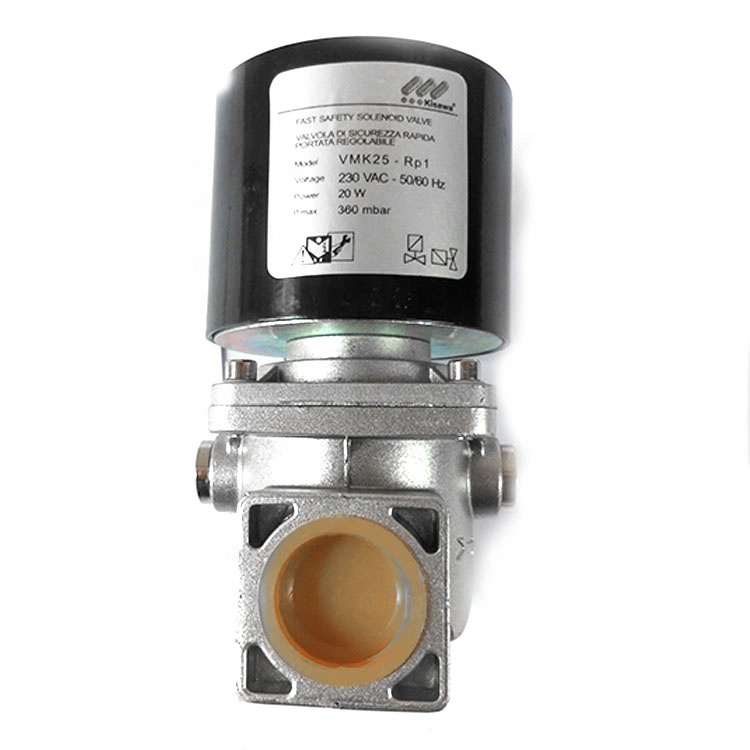
2/2-way valve → standard ON/OFF gas control
-
Most gas trains use this configuration
(b) Fail-safe mode
-
Normally Closed (NC) → industry standard
-
Closes automatically on power loss (critical safety)
-
6) Operating principle
Choose based on pressure and pipe size:
-
Direct-acting
-
Works at zero pressure
-
Small flow / low pressure
-
-
Pilot-operated
-
Needs pressure differential
-
Better for large flow & gas trains
-
7) Pipe size & connection (DN)
-
Match pipeline diameter (DN)
-
Typical:
-
≤ DN50 → threaded
-
DN50 → flanged
-
8) Electrical specifications
Match your control system:
-
Voltage: 24V DC, 110V AC, 230V AC
-
IP rating (dust/water protection)
-
Power consumption
For hazardous areas:
-
Explosion-proof coil (ATEX) required
9) Safety standards & certifications (VERY IMPORTANT)
For industrial gas trains (especially in Europe/Germany):
Look for:
-
ATEX (explosive atmosphere)
-
DVGW (gas approval in Germany)
-
CE / EN standards
-
Leak-tightness class
✔ Required for compliance and insurance
10) Switching performance & durability
Check:
-
Response time (<100 ms typical)
-
Cycle life (≥ 1 million cycles)
-
Tight shut-off (no leakage)
11) System integration (gas train level)
In a complete gas train, ensure:
-
Two safety shut-off valves (SSOV)
-
Optional:
-
Valve proving system (leak test)
-
Pressure switches
-
✔ These systems verify no leakage between valves before startup
12) Environment & installation conditions
Consider:
-
Outdoor vs indoor
-
Dust / humidity
-
Ambient temperature
-
Vibration
Select:
-
IP65+ enclosure
-
Corrosion-resistant body
Quick selection checklist (engineer-style)
✔ Gas type (NG / LPG / special gas)
✔ Pressure (min / max)
✔ Flow rate (Kv/Cv)
✔ Pipe size (DN)
✔ Valve type (2/2 NC)
✔ Operation (pilot or direct)
✔ Voltage & IP rating
✔ Certifications (ATEX, DVGW, CE)
✔ Response time & life cycle
✔ Safety configuration (double valve system)
Practical tip (important)
If you’re designing a burner gas train:
👉 Don’t select a single valve in isolation
👉 Select a complete safety valve assembly (double SSOV + VPS)
This ensures compliance with standards like:
-
EN 746-2 (industrial furnaces)
-
EN 676 (gas burners)
- Phone: 86 185 6630 3837
WhatsApp: 86 185 66303837
Email: ekelairn@gmail.com
Web.: http://ekgas.com
Leave a comment
