




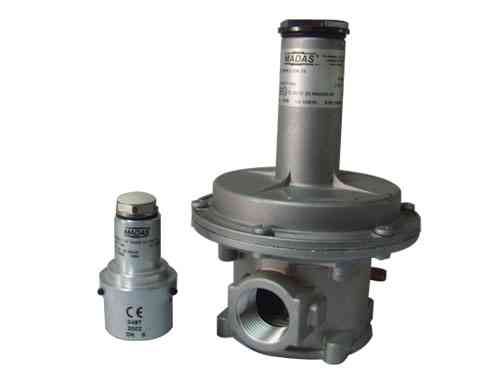
Pressure Relief Valve (PRV)
Ekgas, here’s a clear and simple explanation of a Relief Valve suitable for technical use:
What Is a Relief Valve?
A relief valve is a safety device used in gas, steam, liquid, and hydraulic systems to protect equipment from overpressure. When the system pressure rises above a preset limit, the relief valve automatically opens to release excess pressure, preventing equipment damage, leakage, or explosion. Once the pressure drops back to a safe level, the valve closes again.
Key Functions of a Relief Valve
✔ 1. Overpressure Protection
Its main job is to keep the system within a safe pressure range.
✔ 2. Prevents Equipment Damage
Protects pipelines, regulators, pumps, tanks, burners, and other pressure-sensitive devices.
✔ 3. Ensures System Safety & Stability
Avoids hazardous failures caused by pressure buildup.
✔ 4. Automatically Resets
Closes again when pressure returns to normal.
How a Relief Valve Works (Simple Explanation)
The valve is set to a preset pressure.
When system pressure exceeds this limit, the force pushes the valve open.
Excess gas or liquid is released.
After pressure decreases, a spring returns the valve to the closed position.
Where Relief Valves Are Commonly Used
Gas pipelines
Industrial burners and boilers
Compressors
Pumps
Heat exchangers
Oil & gas systems
Chemical plants
Types of Relief Valves
Type Description
Pressure Relief Valve (PRV) Opens when system pressure exceeds the set value.
Safety Relief Valve (SRV) For both liquid and gas; opens rapidly for safety.
Thermal Relief Valve (TRV) Protects against thermal expansion in pipelines.
Pilot-Operated Relief Valve Accurate and stable pressure control in high-pressure systems.
Why Relief Valves Are Important
Prevents explosion risks
Protects expensive industrial equipment
Ensures compliance with safety standards
Reduces downtime and maintenance costs
Latest Posts

July 28, 2025
Do you know electric actuator?

April 13, 2026
How to keep an industrial gasl regulator works well

April 11, 2026
How to keep an industrial gas filter works well

April 10, 2026
How to select a good gas burner for a gas train
April 9, 2026
How to select a good gas fitler for a gas train

April 8, 2026

Leave a comment