How to keep an industrial gas filter for a gas train works well
Keeping an industrial gas filter in a gas train working reliably is mostly about preventing contamination buildup, monitoring pressure drop, and maintaining seal integrity. Here’s a practical, field-oriented approach:
1. Monitor Differential Pressure (ΔP)
This is your most important health indicator.
- Install a differential pressure gauge or transmitter across the filter.
- Track baseline ΔP when the filter is clean.
- Set alarm limits (typically 2–3× the clean ΔP or per manufacturer spec).
- A rising ΔP = clogging → schedule cleaning or replacement.
2. Establish a Maintenance Schedule
Don’t wait for failure.
- Routine inspection: weekly or monthly depending on gas quality.
- Element replacement/cleaning:
- Cleanable types: blow with dry air or wash (if allowed).
- Disposable cartridges: replace at ΔP limit or fixed intervals.
- Adjust frequency based on:
- Dust/rust content in gas
- Upstream pipeline condition
- Operating hours
3. Ensure Proper Installation
A poorly installed filter won’t perform well.
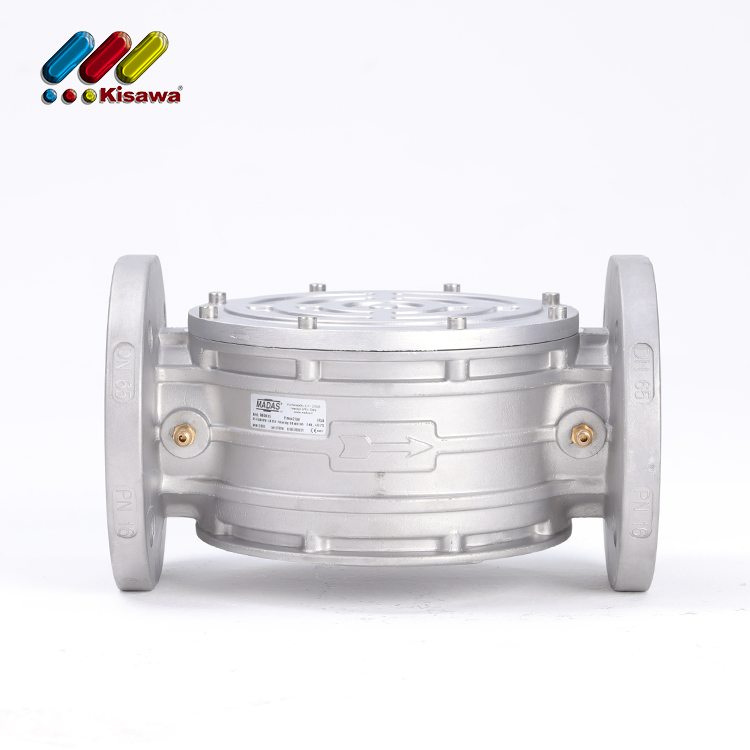
- Respect flow direction (arrow marking).
- Avoid installing too close to elbows/valves → reduce turbulence.
- Provide enough space for maintenance/removal.
- Use proper gaskets to avoid bypass leakage.
4. Protect Against Moisture and Condensate
Moisture is a silent killer for filters.
- Install drain valves at the filter housing.
- Regularly drain condensate (daily if wet gas).
- Consider upstream:
- Gas dryer
- Separator
- Prevent freezing in low-temperature environments.
5. Maintain Seal Integrity
Leakage = unfiltered gas bypass.
- Check O-rings, gaskets, and sealing surfaces during every service.
- Replace worn or hardened seals.
- Tighten bolts evenly to avoid deformation.
6. Choose the Right Filter Element
Performance depends heavily on correct selection.
- Filtration grade (e.g., 5 μm, 50 μm) based on burner/valve requirements.
- Material compatibility:
- Stainless steel for high temp/corrosive gas
- Synthetic fibers for fine filtration
- Ensure compliance with standards (EN, ISO, or local gas codes).
7. Keep the Upstream System Clean
A filter shouldn’t be your only defense.
- Inspect pipelines for rust, scale, or debris.
- Use upstream strainers or separators if gas is dirty.
- Commission new systems properly (blowdown/cleaning before operation).
8. Record and Trend Data
Move from reactive to predictive maintenance.
- Log:
- ΔP readings
- Replacement dates
- Contamination type
- Analyze trends to optimize maintenance intervals.
9. Safety Checks
Gas systems demand strict safety discipline.
- Depressurize before opening the filter.
- Use gas detectors when servicing.
- Follow lockout/tagout (LOTO) procedures.
10. Keep Spare Parts Ready
Downtime in a gas train can stop production.
- Stock:
- Filter elements
- Gaskets/O-rings
- Standardize models to simplify inventory.
Quick Rule of Thumb
If you remember just three things:
- Watch ΔP
- Drain moisture
- Replace elements on time
Phone: +86 185 6630 3837
WhatsApp: +86 185 66303837
Email: ekelairn@gmail.com
Web.: http://ekgas.com
Leave a comment