How to select a gas proportional valve for a gas train
Selecting a gas proportional valve for a gas train is not just about picking a model—it’s about matching control performance, safety, and system compatibility. Here’s a practical, engineering-focused guide.
1. Start with the application (most critical)
Ask yourself first:
-
What do you need to control?
-
Flow rate (burner modulation)
-
Pressure (gas-air ratio control)
-
Temperature (via combustion control loop)
-
-
Static or dynamic system?
-
Static → simple modulation
-
Dynamic (frequent changes, burner cycling) → requires fast response & high durability
-
👉 For most gas trains (burners, boilers):
Dynamic control + high stability is required
2. Match flow capacity (Cv / Kv sizing)
This is the most common mistake.
-
Select valve based on:
-
Maximum gas flow rate
-
Inlet pressure & allowable pressure drop
-
-
Use Cv/Kv value to size the valve correctly
👉 Rules of thumb:
-
Too small → insufficient firing rate
-
Too large → poor control accuracy at low fire
✔ Always size for turndown range, not just max flow
3. Choose the right valve type
(A) Direct-acting proportional valve
-
Best for:
-
Small flow
-
High precision
-
-
Fast response, high accuracy
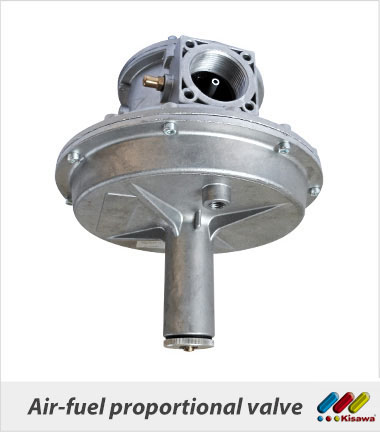
(B) Pilot-operated proportional valve
-
Best for:
-
Large flow gas trains
-
Industrial burners
-
-
More energy-efficient but needs pressure differential
👉 In gas trains:
4. Control signal compatibility
Ensure the valve matches your control system:
-
0–10 V (common in burner control)
-
4–20 mA (industrial standard)
-
PWM / digital bus (advanced systems)
Mismatch here = valve unusable.
✔ Also check:
-
PLC / burner controller compatibility
-
Feedback (if closed-loop control is needed)
5. Pressure & temperature limits
You must verify:
-
Maximum inlet pressure
-
Outlet pressure control range
-
Ambient & gas temperature
Incorrect rating → instability or failure
6. Gas type & material compatibility
Different gases require different materials:
-
Natural gas / LPG → standard brass or aluminum OK
-
Biogas / corrosive gas → stainless steel + special seals
-
Hydrogen → strict compatibility check
✔ Seal materials (FKM, EPDM, etc.) must match gas chemistry
7. Control performance (very important)
Look at:
-
Response time (fast = better combustion control)
-
Repeatability / hysteresis
-
Rangeability (turndown ratio)
→ determines how well low-fire operation works
👉 For burners:
-
High turndown = better efficiency + lower emissions
8. Safety requirements (non-negotiable)
Gas train = safety-critical system.
Choose valves with:
-
Normally closed (NC) design (fail-safe)
-
Built-in or external shut-off valves
-
Certifications:
-
CE / UL / CSA
-
EN 161 / ISO standards
-
-
Explosion-proof if required
✔ Safety always overrides cost
9. Environmental & installation factors
Check:
-
IP rating (dust, moisture)
-
Vibration resistance
-
Mounting orientation
-
Space constraints
10. Integration with full gas train
A proportional valve must work with:
-
Gas filter
-
Pressure regulator
-
Safety shut-off valves
-
Burner controller
👉 Poor matching = unstable flame or unsafe operation
Practical selection checklist
Use this quick checklist when choosing:
-
✔ Gas type (NG, LPG, etc.)
-
✔ Flow rate + Cv/Kv sizing
-
✔ Pressure range
-
✔ Control signal (0–10 V / 4–20 mA)
-
✔ Valve type (direct vs pilot)
-
✔ Response speed & turndown
-
✔ Safety certifications
-
✔ Material compatibility
Simple recommendation logic
-
Small system (lab / small burner):
→ Direct-acting, high precision -
Industrial gas train:
→ Pilot-operated + 4–20 mA + high Cv -
High-performance combustion system:
→ Fast response + high rangeability + closed-loop control - Phone: +86 185 6630 3837
WhatsApp: +86 185 66303837
Email: ekelairn@gmail.com
Web.: http://ekgas.com
Leave a comment